
Oliver
Last updated: 26/10/2026
Step 1: Define your offer
This is where most venues stall, so start here. Don’t overthink the strategy. Don’t read twelve more articles. Just answer one question: what would you invite someone to experience?
Creators don’t work for “exposure.” They work for experiences worth creating content about. Your offer needs to be genuine and specific.
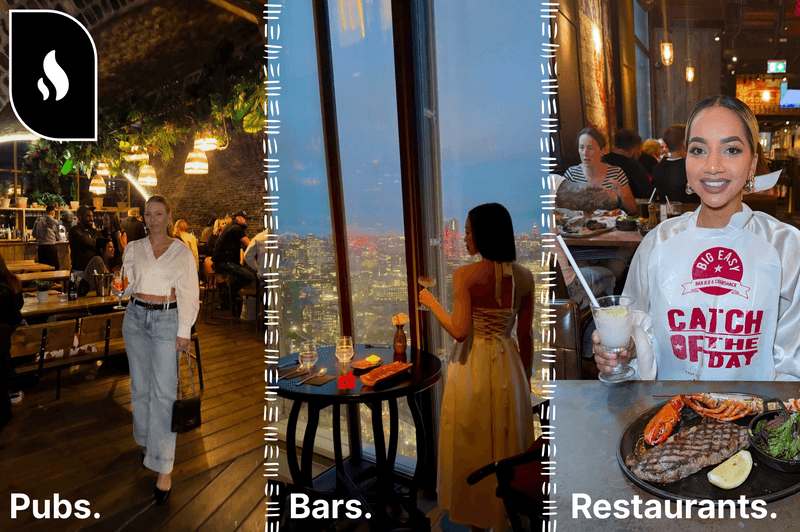
Good offers for pubs, bars, and restaurants:
- A full tasting menu for two
- A new menu item launch with behind-the-scenes kitchen access
- A VIP experience at your next event
- A cocktail masterclass or brewery tour
- Sunday roast for the family (this one performs ridiculously well, every time)
The more specific and experiential, the better the content. “Come eat for free” produces mediocre content. “Come try our new seven-course tasting menu before anyone else” produces content people save and share.
Why this works (and why now)
A few things have shifted that make 2026 the right time for any pub, bar, or restaurant to start, even if you’ve avoided it until now.
The numbers are hard to ignore. According to Joli App’s hospitality research, 58 percent of TikTok users have visited a restaurant after seeing it on TikTok. Among UK Gen Z, 77 percent factor a venue’s Instagram and TikTok presence into where they choose to book. These aren’t “nice to know” stats. Instagram and TikTok are now the most influential discovery channels for UK diners, ahead of Google.
The economics make sense too. Creator content costs 70 to 85 percent less than equivalent agency content, and the engagement rates are 2.2 to 2.5 times higher. You don’t need a marketing department or a five-figure budget. You need a plan and some consistency.
And the infrastructure exists now. Platforms handle the matching, the vetting, and the logistics so you don’t need to spend your evenings on Instagram trying to figure out who’s real and who bought their followers.
Step 2: Target micro-creators in your area
You want creators with 2,000 to 50,000 followers who:
- Live within a reasonable distance of your venue
- Post about food, drinks, going out, or local life
- Have genuine engagement (comments from real people, not just emoji spam)
- Produce content you’d want on your own feed
Audience location is the single most important factor. A food creator with 8,000 followers in your town is worth infinitely more to you than one with 80,000 followers spread across the country.
Platforms like Pingfluence vet creators specifically for audience authenticity and location match before they can collaborate with venues, which takes the guesswork out entirely.
Step 3: Think volume, not perfection
The single biggest mistake venues make is treating creator marketing like traditional advertising, where everything has to be perfect and approved and polished before it goes out.
It doesn’t. The more polished it looks, the worse it performs.
You want 10 to 20 creators per month producing genuine content about their experience. Not all of it will be amazing. Some will massively overperform. That’s the point. Consistent presence in feeds, not one perfect post.
Step 4: Let them create
Give creators a genuine experience and then get out of the way. Don’t hand them a script. Don’t tell them what to say. Don’t ask them to tag seventeen accounts and use a branded hashtag nobody will ever search for.
The whole reason creator content beats brand content is because it feels real. The moment you over-brief it, you’ve turned it into an ad, and audiences can smell an ad from the first frame.
Give them: the experience, your Instagram handle, and maybe one key thing you’d like them to mention (a new dish, a seasonal special, whatever). That’s it. That’s the brief.
Step 5: Repurpose everything
Creator content shouldn’t live and die on their feed. The best-performing venues reuse creator content across:
- Their own Instagram and TikTok grid
- Their website (homepage, gallery, testimonials)
- Email marketing
- Paid social ads (where it consistently beats brand-shot creative)
- Google Business Profile posts
According to the IAB UK State of Influencer Marketing report, the shift toward long-term partnerships and UGC repurposing is the dominant trend in how UK brands structure creator programmes. That applies doubly for hospitality where the visual product IS the content.
Step 6: Measure what matters
Track three things:
- Content volume: How many pieces did creators produce this month?
- Save rate: How many people saved the posts? Saves correlate strongly with intent to visit.
- Booking correlation: Most venues see a 24 to 72 hour lag between a content spike and increased bookings. Track it.
Don’t obsess over follower counts or impressions. A post with 3,000 views and a 15 percent save rate will drive more bookings than a post with 100,000 views and a 1 percent save rate.
What this looks like after three months
Venues that run a consistent creator programme for 90 days typically see: a content library of 30 to 60 pieces they can reuse, algorithmic relevance building (Instagram and TikTok start showing the venue in discovery feeds organically), measurable booking increases, and a growing pool of creators who want to work with them. That last one matters because it makes future months easier and cheaper.
The flywheel takes about 90 days to start spinning. Most venues that quit early would have seen results within the following fortnight.
Explore how Pingfluence structures this for venues at every budget level.